Remember when foldable phones felt more like sci-fi prototypes than serious devices?
You’re here because you’re wondering if that’s changed—and what’s actually worth paying attention to in the sea of flashy announcements and sleek unboxings.
The truth is, foldable device trends are evolving fast, and not just with better hinges or fewer screen creases. We’re seeing real breakthroughs in display layering, software adaptation, and experimental form factors that go beyond the typical phone-tablet hybrid.
This article cuts through the hype. We’ll walk you through the most meaningful innovations happening right now—what’s actually changing the way these devices work, hold up over time, and what signals the next major shift in mobile design.
We’ve been tracking core tech changes in this space for years. From flexible OLED tech to UI scaling realities, we know how to spot the updates that matter and expose the ones that are just marketing noise.
You’ll leave with a clear view of where foldables are heading—and why this time, it might not just be a gimmick.
Trend 1: The Pursuit of the ‘Perfect’ Fold – Durability and Display Advancements
As we explore the potential of foldable devices and their impact on mobile hardware, it’s also worth checking out our roundup of the most innovative gadgets in our article on the Best Tech in 2023 at Feedcryptobuzz – for more details, check out our Best Tech In 2023 Feedcryptobuzz.
Have you ever picked up a foldable phone and immediately zoomed in on that crease running down the center? Yeah, you’re not alone. That telltale line is practically the badge of every first-generation foldable. But here’s the twist—manufacturers aren’t just accepting the crease; they’re actively engineering it into extinction.
So what’s changed?
Let’s start with Ultra-Thin Glass (UTG). It’s come a long way. Modern UTG blends flexibility with strength, using new composite layers that bend without snapping and reduce crease visibility dramatically. (You still know it’s there—but it’s more a whisper than a shout.)
Now ask yourself: how does a glass screen curl without cracking? That’s where innovative hinge mechanics come in. Most top-tier devices now feature waterdrop or teardrop style hinges. This allows the screen to fold in a teardrop curve rather than a sharp bend, decreasing tension and enabling a cleaner, almost gapless fold.
And it gets better:
- Devices now boast IPX8 water resistance
- Durable aluminum frames and scratch-resistant exterior screens
- Drop and dust resilience, previously unheard of in foldables
So the big question is—are foldables still fragile novelties, or are they becoming daily drivers? With foldable device trends pushing toward rugged performance, the answer might just surprise you.
(Pro tip: Always check IP ratings before buying—IPX8 might save your investment from an accidental coffee spill.)
Trend 2: Software That Understands the Fold – The UX Revolution
I remember the first time I used a foldable phone on a cross-country flight—half the screen became a keyboard, the other half was my writing app. It was like a portable workstation that fit in the seat-back pocket.
That’s the magic of the new fold-aware apps. Instead of just stretching traditional interfaces to fit flexible screens, major developers are designing dual-pane layouts that intuitively adjust to how the device is folded. It’s not just resizing; it’s rethinking the experience for an entirely new form factor.
Some old-school tech purists argue that these adaptations are gimmicks—temporary trends that won’t stick. They claim app layouts should remain consistent across devices for simplicity. Fair point. But here’s what they miss: when the hardware evolves, the software has to follow. Otherwise, we’re just folding glass for no reason (sounds fancy, but not exactly useful).
OS-level integration is making this shift possible. Android, for example, now includes persistent taskbars and near-seamless drag-and-drop multitasking. Remember when that kind of functionality required a full desktop? (We’ve come a long way from tapping through endless tabs.)
Pro tip: Try Flex Mode on a foldable with your favorite productivity app—you might never go back to single-screen multitasking.
The foldable device trends we’re seeing today aren’t just hardware hype. They’re laying the groundwork for how future software thinks, adapts, and ultimately, fits into our lives.
Trend 3: Diversification of Form – It’s Not Just Phones Anymore
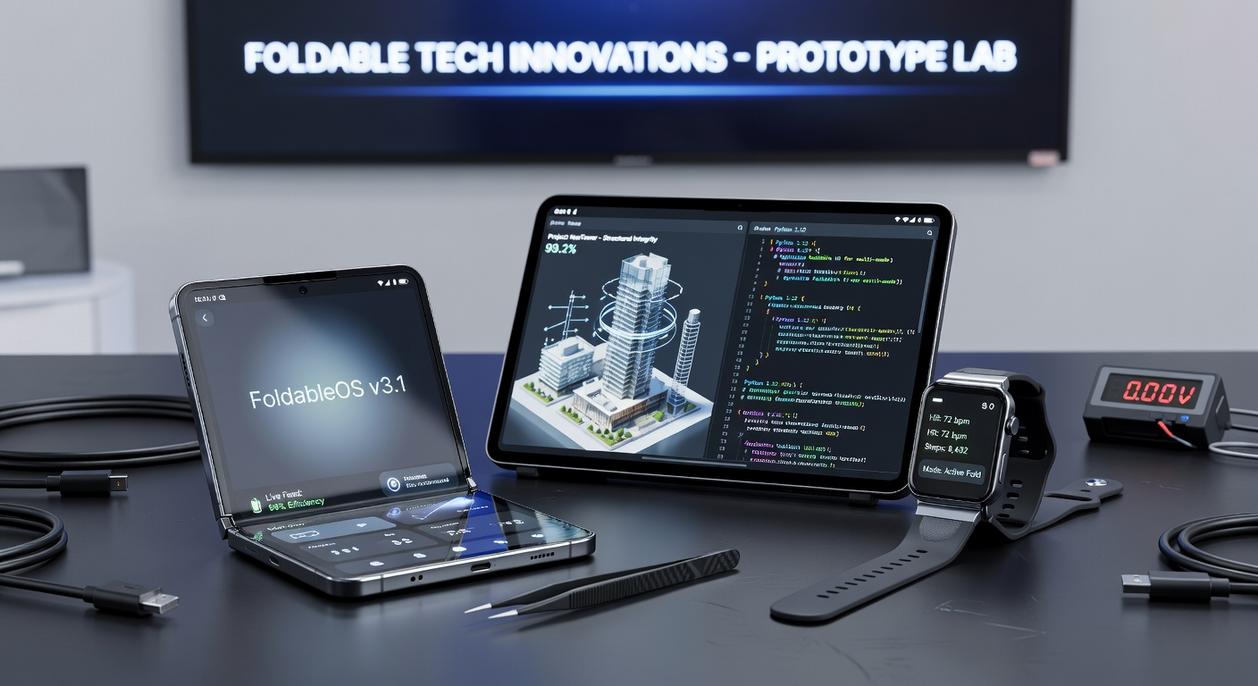
Remember when foldable screens felt like sci-fi? Now they’re multiplying like streaming platforms—just when you thought you’d seen them all, here comes another twist (literally).
Let’s talk tri-fold and Z-fold devices. These multi-hinged wonders are trying to be the Swiss Army knives of mobile tech: phone-sized in your pocket, tablet-sized when you need screen real estate. It’s like origami got a tech degree. Sure, some skeptics say they look like gadgets from a Bond villain’s briefcase—but admit it, you kind of want one.
Then there’s the rise of rollable and slidable concepts. These bad boys don’t just fold—they unroll, extend, and retract like a Transformer with touchscreen ambitions. While these aren’t in your local store just yet, they’re inching closer to reality. Think of it as the glow-up from fold to flow.
And don’t sleep on large-format foldables. We’re talking 15 to 17-inch foldable laptops and tablets built for creative pros and anyone with spreadsheet trauma. These devices blur the line between portability and productivity—no dongle drama required.
Yes, foldable device trends are moving fast. But hey, if your screen can shape-shift, maybe your workflow can, too. (Pro tip: Just don’t sit on one.)
Also worth a read: how esim technology is changing device connectivity—because flexible screens deserve flexible networks.
Trend 4: The Push for Accessibility – Price Reduction and Market Segmentation
“Look, not everyone wants to drop $1,800 on a phone,” said Rajiv Kale, a mobile analyst at GadgetCore. “And now, they don’t have to.”
Foldable device trends are shifting fast. Thanks to scaling production and a maturing supply chain—especially around complex parts like Ultra-Thin Glass (UTG) and custom hinges—manufacturers can finally bring costs down. (Pro tip: When hinges stop being hand-crafted engineering marvels and start being off-the-shelf components, prices follow.)
Enter the ‘Lite’ models. Think Galaxy Z Flip5 Lite or the rumored Pixel Fold Mini. These aren’t underpowered knockoffs—they’re strategic moves to snag budget-conscious consumers from the mid-range market. “We’re seeing brands position foldables as everyday tech, not just futuristic flex,” said Kale.
And with fresh competition from companies like Tecno and HONOR, legacy players are being pushed harder to innovate and adjust prices. The result? A foldable market that finally looks ready for the mainstream.
(Because apparently, foldables shouldn’t cost more than your rent.)
Trend 5: AI Integration – Smarter Flexible Displays
Some skeptics argue that AI on foldable devices is just another overhyped gimmick—more sizzle than substance. And to be fair, not every feature labeled “smart” has lived up to the promise (remember the smart fridge that tweeted? Neither does anyone else).
But let’s not dismiss what’s happening too quickly.
Take context-aware interfaces, for instance. With on-device AI, your phone doesn’t just react—it anticipates. Open a YouTube link, and it instantly shifts into Flex Mode, setting your screen upright for hands-free viewing. It’s subtle but powerful. You’re not navigating; you’re being guided.
Then there’s AI-powered multitasking. Foldables give you space—AI helps you use it. Based on your past habits, it suggests pairing Gmail with Calendar or Canva with Google Drive in split screen. Think of it as a digital co-pilot who actually knows how you work.
Sure, concerns around privacy or device lag are valid. But optimization is evolving fast.
Lastly, generative AI is getting a glow-up—imagine using one half of your display to type a prompt and the other half to watch art or copy flow into place, live.
Pro tip: Use this to storyboard faster or review ideas on the fly.
It’s not hype—it’s the next phase in foldable device trends.
The Foldable Future is Finally Unfolding
You came here wanting clarity on where foldable tech is really headed. Now, you’ve got it.
The shift from flimsy concepts to intelligent, durable designs is no longer a promise—it’s happening. Foldable device trends like improved hinge engineering, smarter software, and adaptive form factors are reshaping what’s possible.
The average buyer still struggles to separate hype from innovation. That’s why looking past glossy specs matters more than ever. The real breakthroughs are found in durability, UI adaptability, and long-term reliability.
Ready to choose a device that’ll last and lead? Focus on foldable device trends to spot game-changers, not gimmicks.
Here’s your move: Skip the marketing fluff. Look for devices reflecting real innovation in foldable device trends—that’s how you’ll invest in tech that’s built for the future. We’re the #1 source for identifying tomorrow’s tech before it hits mainstream. Start evaluating smarter—today.