If your system is starting to feel sluggish, unscalable, or just too hard to evolve, you’re not alone.
Today’s software demands faster responses, greater resilience, and instant scalability—but traditional architectures often can’t keep up. You’re here because you’ve hit those limits, and you’re looking for a better way.
Here’s the shift that’s making all the difference: event-driven architecture.
Over the years, we’ve seen firsthand how tightly-coupled systems implode under pressure. That’s why we built this guide—not just to explain what event-driven architecture is, but to show you exactly how it works in real-world, high-throughput systems.
You’ll walk away with a clear understanding of why it outperforms legacy models, how to start applying it to your own tech stack, and what design decisions accelerate scaling without compromising performance.
No fluff—just practical, proven architecture strategies for building responsive systems that are ready for the future.
What is Event-Driven Architecture (EDA)? A Practical Definition
Plenty of articles define event-driven architecture as just another tech trend—but that sells it short. What really sets it apart is that it reimagines how parts of a system communicate: not through direct commands, but by reacting to meaningful events as they happen.
An event is simply a noteworthy change in state—say, itemaddedtocart or paymentprocessed. Instead of waiting for direct requests, systems built on event-driven architecture listen for these events and respond automatically.
Here’s a helpful analogy: Imagine subscribing to a news app. It alerts you the moment something important happens. That beats calling the newsstand every few minutes asking, “Anything new?” (Yes, that would get old fast.)
The competitive edge? Most competitors stop at definitions. What they often miss is the loose coupling advantage: in EDA, components don’t need constant awareness of each other. This means faster scalability, higher fault tolerance, and cleaner software evolution—without a complete system rewrite every time something changes.
Pro tip: Start small—add asynchronous listeners to a single workflow before scaling enterprise-wide.
The Three Pillars of EDA: Producers, Brokers, and Consumers
Have you ever wondered how complex systems—like ride-hailing apps or stock trading platforms—stay so responsive in real time?
The answer lies in event-driven architecture.
Let’s break it down.
Event Producers are the initiators. Think of them as digital observers: when something changes (say, a user clicks ‘Buy’), they generate an event and send it off. And then? They move on. No waiting around for a thank-you note (or a response).
But how do we go from that initial spark to meaningful action?
Enter the Event Broker—or message bus systems like Kafka or RabbitMQ. This behind-the-scenes powerhouse receives those events and routes them to interested parties. Its real superpower? Decoupling. Producers don’t need to know who’s listening. (Much like shouting into a crowd and trusting the right person will respond.)
Which brings us to Event Consumers. They “subscribe” to the events that matter to them and take action when the broker passes one along. For example, if the event is “payment received,” the consumer might trigger an email confirmation.
Pro Tip: Drawing a Producer → Broker → Consumer diagram helps visualize how neatly these roles are separated.
Still think every system needs tight integrations? This model might surprise you.
The Performance Advantage: How EDA Decouples and Accelerates
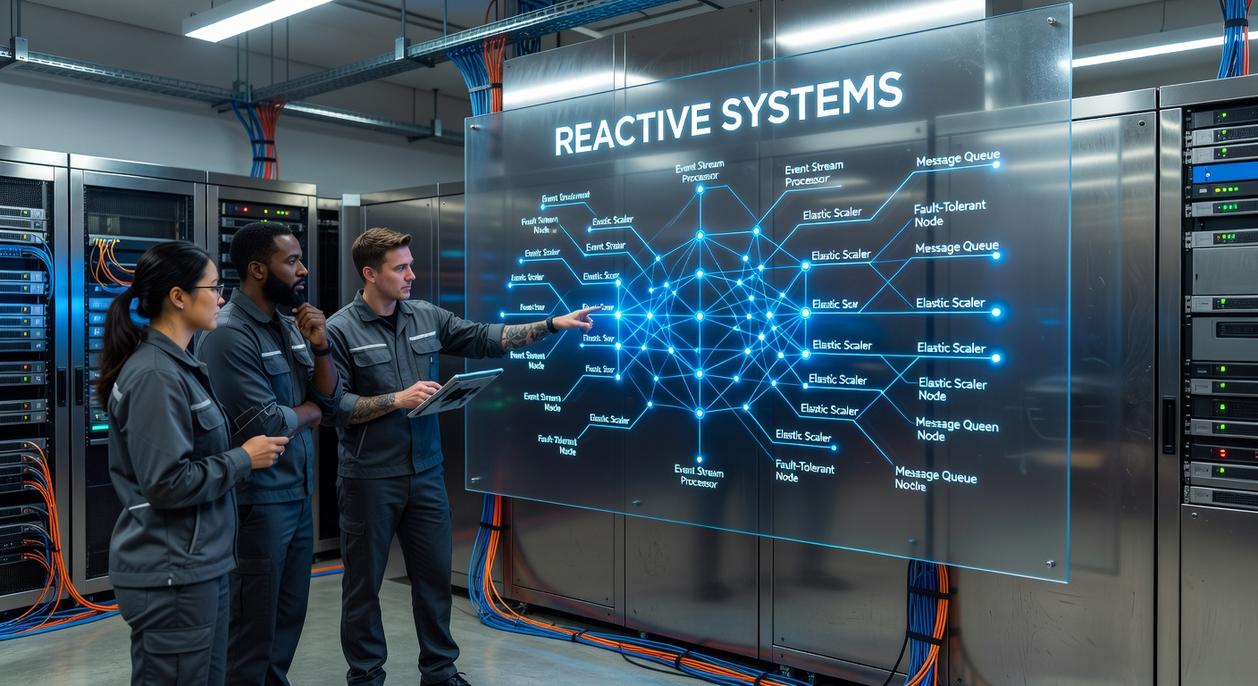
Ever wonder why some systems feel lightning-fast while others drag like it’s 2003 on dial-up? Here’s the secret sauce: asynchronous operations.
In traditional systems, when one service sends a request, it often waits around for a response (like waiting on hold with customer service). But with event-driven architecture, the game changes—services fire events and move on immediately. That freed-up time? It gets redirected to other useful tasks, boosting overall responsiveness.
Now think about this: what if multiple services could act on the same event—simultaneously? That’s where parallel processing shines. When a sale happens online, one consumer can update inventory, another can trigger a shipping process, and yet another can send you that “Thanks for your order!” message—all at once. It’s multitasking at machine speed.
And then there’s latency—or rather, the lack of it. Since services aren’t politely waiting for one another to finish their part, users see faster results. (The app feels like it’s reading your mind.)
But what happens when traffic spikes? Like during a flash sale or when a new video game drops? That’s where load leveling steps in. An event broker absorbs the surge, queues requests, and ensures they’re processed smoothly instead of crashing everything.
Pro tip: Reduced latency doesn’t just mean speed—it often means happier users who stick around longer.
Still think synchronous is the only way?
The Scalability Blueprint: Scaling Services Independently
Let’s rewind to early 2021—when a surge in e-commerce traffic during global lockdowns exposed just how brittle many monolithic systems really were. One bottleneck, and the whole app slowed to a crawl (remember waiting five minutes just to get a checkout confirmation?).
This is where targeted scaling comes into play, and why it’s become a go-to strategy since then. Instead of scaling your entire application just because one part is lagging, you can scale individual consumer services based on their actual load. Say your OrderProcessor service is under heavy pressure while UserAuthentication is cruising along just fine. No need to throw extra resources at the whole setup—you can simply deploy more OrderProcessor instances. Problem targeted, resources saved.
Now, about failures. They’re inevitable (no matter how many “100% uptime” claims you see). But with event-driven architecture, a single consumer service crashing doesn’t derail the whole platform. Events are retained by the broker and wait patiently to be processed once the service recovers.
Here’s the kicker: Evolvability. Want to add a new feature? Just roll out a new consumer that listens to existing events—no need to touch upstream producers. Fast, clean, and efficient (Pro tip: This keeps your legacy code blissfully untouched).
Practical Considerations and Troubleshooting Techniques
Let’s be honest—most articles gloss over the real-world friction of distributed systems. They touch on the theory, wave at complexity, and move on. We’re not doing that here.
Challenge 1: Eventual Consistency.
Yes, your data won’t update everywhere instantly. That’s not a bug—it’s a design tradeoff. And while most tutorials stop there, the real competitive edge comes from how you handle it. Pro tip: In the UI, show indicators like “syncing…” or display last-updated timestamps. In business logic, adopt time-aware validation to avoid subtle conflicts (because nothing screams “why isn’t this updating?!” louder than stale cart data).
Challenge 2: Monitoring and Debugging.
Standard logs won’t cut it. Distributed systems need correlation IDs that trace a single request across services, paired with structured logging—so your logs are machine-readable and searchable. Most overlook this, but the standout teams invest in observability platforms that answer why something broke, not just where.
Challenge 3: Event Ordering.
Many event brokers preserve message order only within a partition. Miss that memo, and retries can produce chaos. So when does it matter? Transactions, inventory counts, anything with strict state progression. Use ordering keys wisely—or better yet, rethink your logic to be order-agnostic (when possible).
Best Practice: Idempotent Consumers.
An “idempotent” consumer processes the same message multiple times without altering the outcome. It’s your safety net against retries, duplicates, and that lovely moment when a broker hiccups. Surprisingly, many guides skip this or treat it as optional (it’s not—build it in).
Underline what most ignore: designing for event-driven architecture isn’t just about scaling—it’s about surviving real-world chaos with elegance.
From Bottleneck to Throughput
If you’ve ever watched your system slow to a crawl under pressure, you’re not alone.
Rigid, synchronous operations have been the hidden culprit behind stalled performance and limited scalability for years. But now, you’ve seen how event-driven architecture offers a way out—decoupling your services, enabling asynchronous workflows, and unlocking the kind of throughput modern systems demand.
You came here looking for a better approach to handle scale and resilience. Now you have the framework to make it happen.
So what’s next? Don’t wait to overhaul everything—start small. Identify one persistent bottleneck. Ask yourself: could an event-driven architecture flow decouple that part of the system and deliver faster results?
Thousands of high-performance teams are already proving it works. It’s time to join them.
Pinpoint that one friction point. Apply event-driven architecture. Experience the results for yourself.