For decades, a tiny plastic SIM card has been the gateway to our mobile identities—controlling how we connect, where we go online, and even which networks we trust.
But that era is ending.
If you’ve ever wrestled with swapping SIMs during international travel, juggled multiple numbers for work and personal use, or struggled during a phone upgrade, you already know the limitations. Physical SIMs weren’t built for a world that expects instant, seamless digital access.
This is where esim technology comes in.
We created this guide to walk you through exactly what esim technology is, how it works, and why it’s quickly becoming the default standard for mobile connectivity. No fluff—just a clear breakdown of how this innovation will simplify your mobile experience and what you need to know to stay ahead.
At Bavayllo, we specialize in cutting through the technical clutter. You’ll get actionable, easy-to-understand insights drawn from the forefront of device evolution.
This isn’t just about saving space inside your phone. It’s about unlocking a more secure, flexible, and truly global way to connect.
What is an eSIM? Deconstructing the Digital SIM
I’ll admit it—when I first heard about eSIMs, I assumed it was just another tech buzzword that’d fizzle out. I stuck with my trusty physical SIM card, convinced it was simpler and safer (spoiler: it wasn’t).
But after a trip abroad where I forgot to bring an extra SIM and got hit with roaming fees that could rival a luxury hotel bill, I decided it was time to learn.
Here’s what I discovered… after learning the hard way.
What is an eSIM?
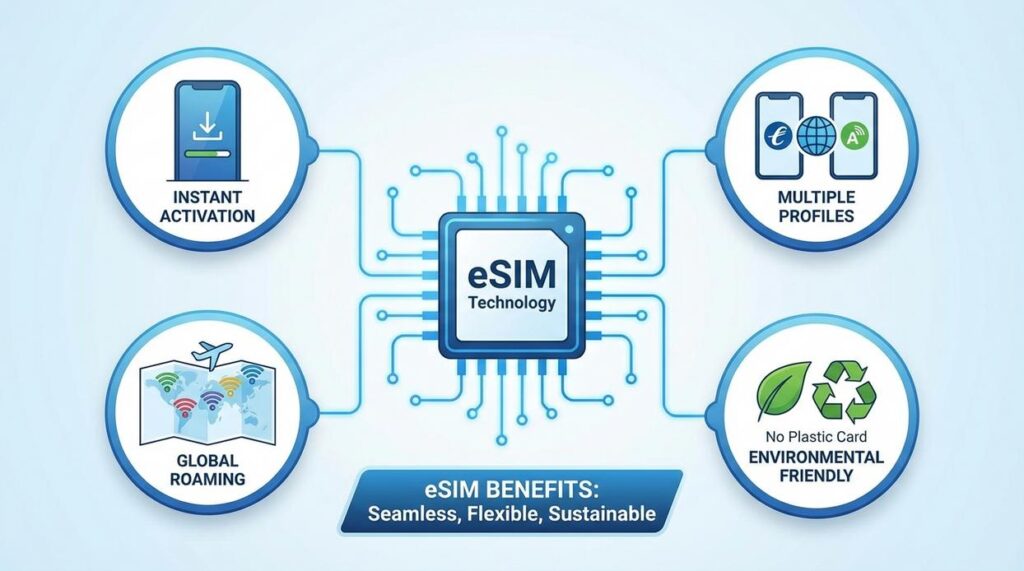
At its core, eSIM technology refers to a rewritable chip embedded directly into a device. Unlike physical SIM cards that you insert and swap manually, an eSIM is downloaded as a digital profile.
Key Lessons I Learned the Hard Way
-
Physical SIMs are not as convenient as they seem
Switching carriers meant fiddling with tiny trays and losing that needle pin (again). With eSIMs, carriers can remotely provision your plan—no tools or trips to the store required. -
Assuming eSIMs don’t work internationally is false
On my second trip (lesson learned), I downloaded a local eSIM profile upon landing. No line, no store visit, just instant data. -
Remote management is the future
eSIMs fulfill the promise of secure, remote subscription updates. You can have multiple profiles and toggle between them—ideal for frequent travelers or folks juggling work and personal lines.
Pro tip: Always check if your phone and carrier both support eSIM activation before canceling your physical SIM plan.
How eSIM Technology Works: From QR Code to Connection
Let’s be honest—swapping out SIM cards feels downright medieval these days.
That little piece of plastic? You drop it, it disappears into a couch cushion dimension. And heaven help you if you’re traveling and need to switch carriers on the fly. That’s why I’m genuinely excited about esim technology. It’s not just another buzzword—it actually fixes a lot of the headaches we’ve come to accept as “normal.”
Here’s how it works, and why it’s way slicker than it looks.
The Activation Process is refreshingly simple:
- You either get a QR code from your mobile carrier or get prompted through their app.
- Open your camera, scan the code.
- Follow the on-screen steps as your device downloads the carrier’s profile.
- Once installed, your phone hooks onto the network—and you’re live.
Some folks worry it’s too easy. They’re skeptical: “No physical SIM? That can’t be secure.” But here’s what they miss—the entire download/authentication is encrypted under the GSMA’s Remote SIM Provisioning standard. (It’s like the banking-level security of mobile connectivity.)
Even better, your eSIM can store multiple SIM profiles. That means switching between networks takes a few taps—no more paperclip stabbings to eject a tray.
Pro tip: Business travelers can juggle work and personal plans without carrying two devices—or losing their minds in airport lounges.
The Major Advantages of Adopting eSIM Technology
“Wait, I don’t need to swap SIM cards anymore?” That’s the first thing I heard from my friend Sam while he was packing for Seoul last month. I nodded and said, “Welcome to eSIM.”
Sam’s situation isn’t unique—frequent travelers, remote workers, and digital nomads are increasingly making the switch. And for good reason. The advantages go far beyond convenience. Here’s what users are actually saying—and why the shift toward esim technology is more than just a fad.
1. Seamless Travel Connectivity
“I landed, opened the settings, clicked a QR code, and had local data in under two minutes,” said Priya, a UX designer who works remotely from different countries each month. No more airport kiosks or fumbling with designs meant for 2005.
2. One Device, Two Lives
Forget the two-phone juggle. With eSIM, you can activate both personal and work numbers on one handset—even if it doesn’t have dual SIM slots. “It’s like having my briefcase and diary in the same pocket,” a consultant joked.
3. Enhanced Security
Unlike physical SIM cards, eSIMs can’t be snatched out easily. If your phone is stolen, your thief isn’t just unlucky—they’re locked out. (Finally, some poetic justice.)
4. Room for Innovation
Less hardware = more opportunities. Removing the SIM tray allows for sleeker, more rugged phones with better water resistance. Pro tip: That extra space even helps boost battery capacity in some new models.
Looking at the rise of wearable tech? It’s all connected—literally. Check out wearables beyond fitness the rise of medical and productivity devices to see how design and connectivity are shaping the future.
Potential Downsides and Current Limitations
I’ll never forget the time I tried to switch phones during a layover in Chicago. My old device was on the fritz, and I thought it’d be as easy as moving a SIM card. Except—no card. Just esim technology. Long story short: 45 minutes on tech support and no mobile data until I landed home.
Here’s the catch:
Switching devices with an eSIM isn’t as plug-and-play as it sounds. Often, you need your carrier to authorize a digital transfer, and some providers make that process feel like decoding ancient runes. (Pro tip: If you’re planning to switch phones, get ahead of the process—don’t wait until you’re at a coffee shop with no signal.)
Carrier support isn’t universal either. While big names are onboard, many smaller MVNOs still lag behind. That’s a real issue if you’re sticking with a budget or local provider.
And let’s be honest—troubleshooting? Not as simple as popping a SIM in and out. Connecting again may require profile resets, additional steps, or (gulp) another carrier call.
Getting Started: Is Your Device eSIM-Ready?
“I thought only the latest phones supported it,” Marcus said, squinting at his settings screen. “But my Pixel 4 has the option right here.”
That’s the thing—many phones already support esim technology, but users don’t always realize it. To check if your phone is compatible, go to Settings > Cellular (or Mobile Data) and look for ‘Add eSIM’ or ‘Add Data Plan’.
Here’s a quick hit list of widely supported devices:
- Apple iPhone XS and newer
- Google Pixel 3 and newer
- Samsung Galaxy S20 and newer
That said, as Emma from support pointed out: “Just because your phone supports it doesn’t mean your carrier does.” So, always confirm with them before you try activating anything.
Embracing a More Connected, Secure Future
Switching mobile plans shouldn’t require a paperclip and a steady hand.
If you’ve ever fumbled with tiny SIM cards—or worse, lost one mid-travel—you know the frustration. That’s exactly the problem esim technology was designed to solve.
This guide helped you understand how esim technology delivers a secure, hassle-free way to manage your mobile subscriptions across devices and locations. No more juggling physical cards—just seamless connectivity wherever life takes you.
You came here looking for a smarter solution. Now you have it.
Now do this: Check your device settings for esim technology support. Then contact your carrier to make the digital switch. It’s the fastest way to boost your device’s flexibility and security—no tiny plastic cards required.
Thousands are already making the move. Don’t get left behind.